
How Much Does It Cost to Build a SaaS Web Application in 2026? [Architecture & Budget Blueprint]
A comprehensive technical and financial blueprint for building a multi-tenant B2B or B2C SaaS platform in 2026. Covers subscription billing, multi-tenant databases, RBAC, and realistic development costs (₹3.5L–₹22L+).
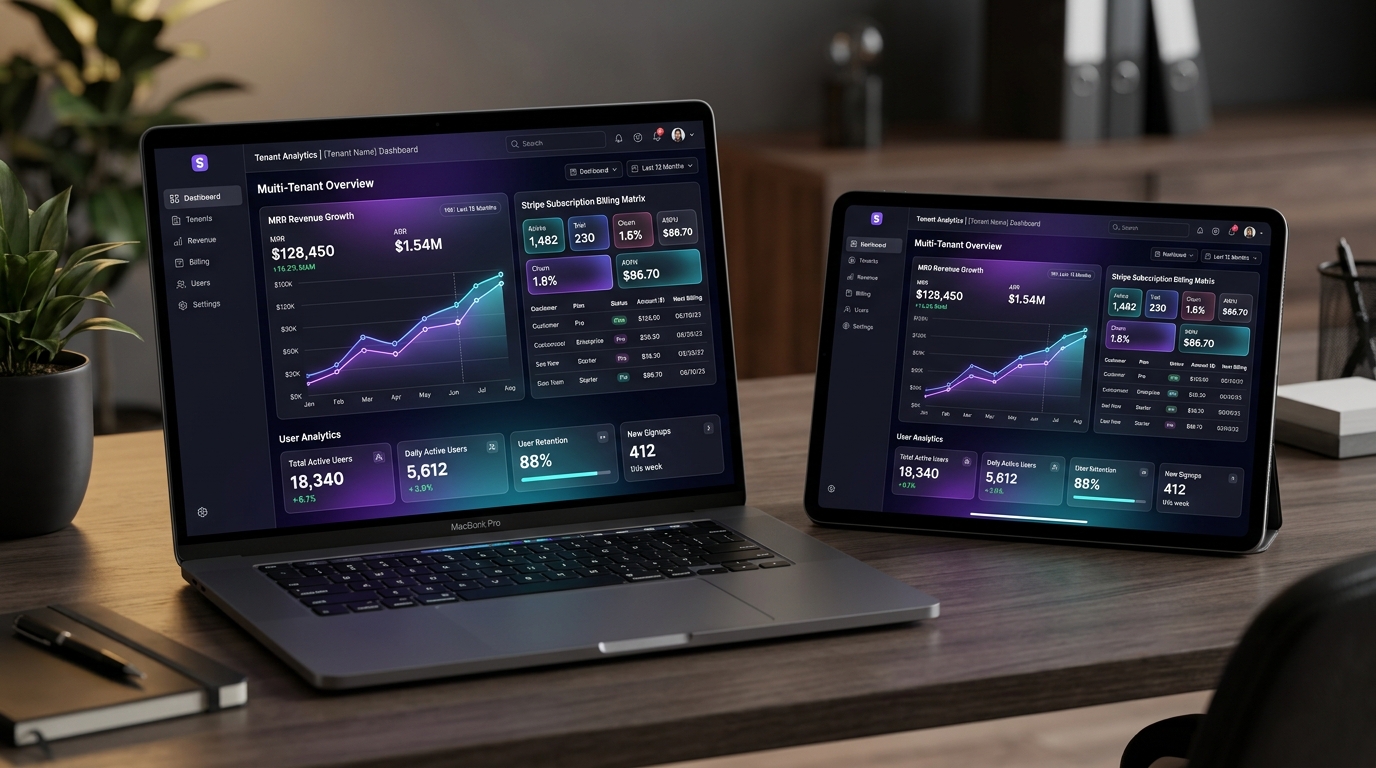
1. Executive Summary: The Economics of Building SaaS in 2026
The global SaaS market continues to compound, but investor expectations have shifted toward capital efficiency and rapid time-to-revenue. In 2026, engineering a market-ready B2B or B2C SaaS web platform in India costs between ₹3,50,000 ($4,200 USD) for a functional MVP and ₹22,00,000+ ($26,500+ USD) for an enterprise multi-tenant platform with custom integrations and SOC2 telemetry.
Partnering with CodeCurious Full-Stack Engineering allows SaaS founders to launch their revenue-generating product in 45 to 60 days.
2. SaaS Development Cost & Timeline Matrix
| SaaS Complexity Tier | Included Modules & Infrastructure | Cost Range (INR / USD) | Launch Timeline |
|---|---|---|---|
| Seed / Bootstrap SaaS MVP | Auth (Google/Email), Stripe/Razorpay billing, single tenant DB, clean responsive dashboard | ₹3.5L – ₹6.5L ($4.2K – $7.8K) | 4 – 6 Weeks |
| Commercial B2B Multi-Tenant Platform | Workspace isolation, team invitations, role-based RBAC, audit logs, webhooks, usage metering | ₹7.5L – ₹13.5L ($9K – $16.2K) | 8 – 11 Weeks |
| Enterprise B2B SaaS Ecosystem | SSO (SAML / Okta), custom domain routing, automated onboarding, compliance telemetry, API suite | ₹15L – ₹24L+ ($18K – $29K+) | 12 – 16 Weeks |
3. Modern B2B SaaS Architecture Blueprint
Scalable SaaS platforms require clean separation of concerns to avoid tenant data contamination and expensive rewrites:
- Frontend Experience: Next.js 15 / React with Tailwind and Shadcn UI for sub-second server-side rendered pages and optimal SEO rankings.
- API Layer: Node.js (Fastify/Express) or Go with modular service architecture and Zod schema validation.
- Multi-Tenant Data Strategy: PostgreSQL with Row-Level Security (RLS) or schema-per-tenant isolation for ironclad data separation.
- Billing & Metering Engine: Stripe Billing / LemonSqueezy with automated webhook handlers for upgrades, downgrades, and dunning management.
4. Core SaaS Feature Engineering Cost Grid
Tiered pricing tables, recurring credit card payments, automated invoicing, customer portal, and tax handling.
Organization switching, team invitations, granular permission matrices (Owner, Admin, Member, Viewer).
API key management, per-minute rate limiting, outgoing event webhooks with automatic retries and signature verification.
Real-time KPI cards, interactive Chart.js/Recharts time-series graphs, CSV/PDF report export engine.
5. SaaS Development FAQs
How do you ensure tenant data isolation in multi-tenant SaaS?
We leverage PostgreSQL Row-Level Security (RLS) where every database query automatically enforces WHERE organization_id = current_user_org at the database engine level, making cross-tenant data leaks impossible.
Can you help us launch an MVP in 4 to 6 weeks?
Yes. By utilizing our battle-tested CodeCurious Enterprise SaaS Starter Architecture (pre-configured Auth, Billing, RBAC, and Email queues), we reduce boilerplate development by over 120 engineering hours.
"A comprehensive technical and financial blueprint for building a multi-tenant B2B or B2C SaaS platform in 2026. Covers subscription billing, multi-tenant databases, RBAC, and realistic development costs (₹3.5L–₹22L+)."

Have A Challenging System To Build?
Let's Engineer It Together.
Partner with our senior engineering squad to architect high-concurrency mobile apps, SaaS platforms, and enterprise AI systems.